
Imagine losing your voice overnight. That’s what happened to industrial psychologist, wife and mother KIM BALLANTINE. Work, confidence and way of connecting with people: all gone in an instant. How did she rebuild her life, parent her young children and keep her marriage going when further health challenges and depression struck? What’s her advice for supporting friends in need, and how did her voice finally return six long years later? CHELSEA BURNELL found out

Kim Ballantine relaxes at home with husband Rob in the wake of a traumatic health journey | Photo: Leentjie du Preez
Kim (62) was born and raised on a smallholding outside Johannesburg, the daughter of a mining engineer and a scientist. Educated at Michael Mount Waldorf School and Kingsmead College, she then gained degrees in economics and industrial psychology at Stellenbosch and Wits universities. Kim lives in Johannesburg with her husband Rob, a retired specialist physician. They have three biological children, four grandchildren and a ‘fourth blessing’ in Khethiwe, who grew up in their home

I WAS TURNING 40 and life was good. Rob asked what I wanted for my birthday. I told him I simply wanted time, because with his work at Baragwanath Hospital and me consulting to the manufacturing industry and mothering three children, we didn’t see much of each other. So he took a day off and brought me breakfast in bed wearing a chef’s apron and nothing more.
He’s never done that again. During the day I started coughing and retching, so badly that I couldn’t breathe and passed out in the bathroom. Over the next week my coughing got progressively worse until my vocal cords closed so tightly I thought I’d suffocate to death. I ended up in hospital and eventually a professor told me he suspected spasmodic dysphonia, whereby impulses from the brain to the vocal cords stop functioning properly. When I tried to speak, a staccato, gravelly sound came out and often my vocal cords went into spasm, rendering me virtually unable to breathe.
The professor said my condition was chronic and the worst he’d seen. He suggested using Botox to paralyse my vocal cords and enable breathing, but this meant no speaking.
‘chronic is forever’
I wasn’t sure how long chronic meant and, in the lift after the appointment, gestured to Rob to ask how long he thought my voicelessness would last. ‘Kim, chronic is forever,’ he replied. And my whole world imploded in icy shock.
After shock came anger. Everything I did was through my voice: consulting, training, connecting. Suddenly it was all taken from me. In one diagnosis I lost health, communication, my business, parenting as I knew it, and that was just the beginning. How would I cope with Natalie only nine, and our twins only seven? They were still so young.
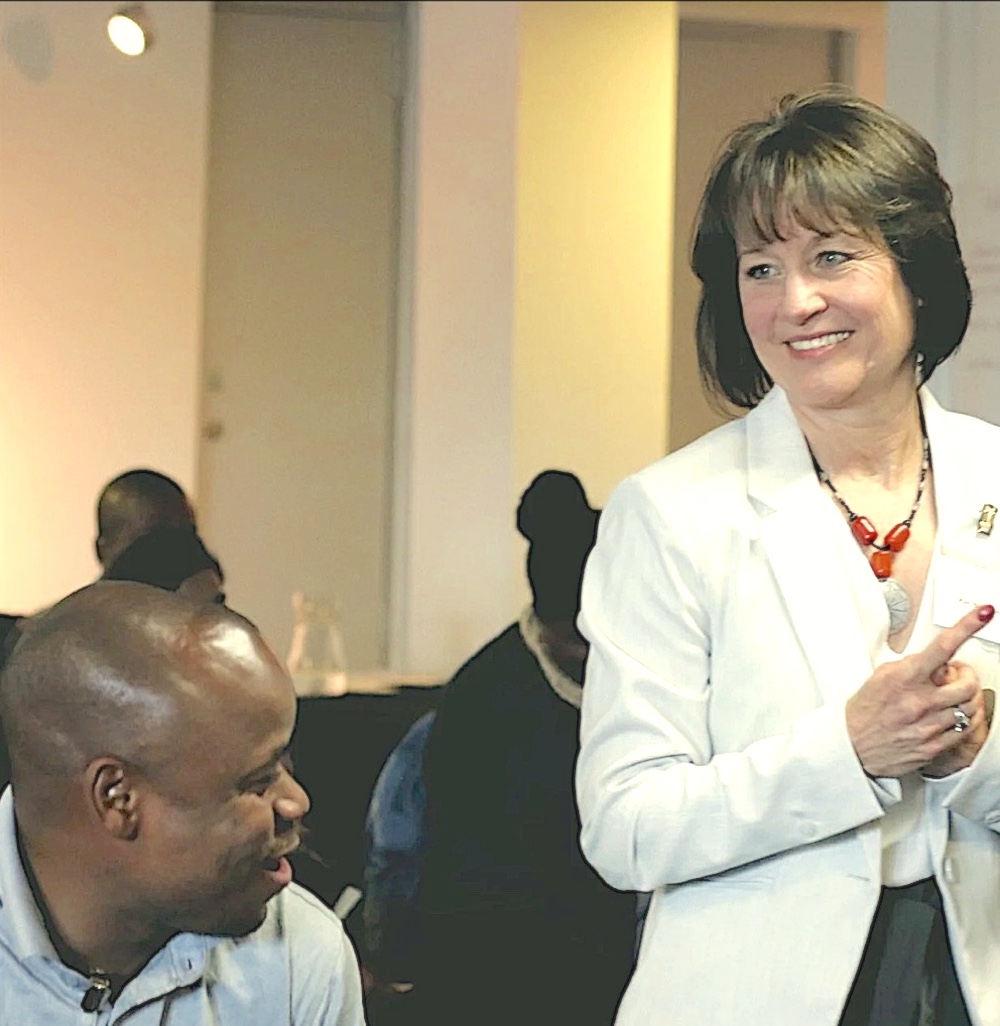
Industrial psychologist Kim at work. In one diagnosis, her career came to an abrupt end
Learning to live without speech was unbelievably frustrating. The children and I learnt sign language, but only Natalie was old enough to read and spell words out. She became my go-to interpreter, and once said, ‘Most children take the stairs through childhood. I think I took the lift.’ She was right. Instead of playing her way through childhood, she started having to protect her siblings from trauma and doing Heimlich manoeuvres when I choked. We got the children into therapy and encouraged them to process their emotions, using methods such as deep breathing or pointing at paper plates with various facial expressions drawn on them to show how they were feeling.
Initially, we were reserved with what we told the children. Then Natalie said to us, ‘Don’t hide anything from us. No information could be worse than our imagination.’ So we decided there and then to always communicate truth, keeping it age-appropriate.
Rob and I believed in Christ, were involved in our local church, and the children had good relationships with Jesus. But something like this can shake your faith to the core. And it did. I simply did not understand the reason behind it all and was desperate about the trauma my family was being exposed to.
Working long hours as a specialist physician, Rob couldn’t initially attend sign language classes and it felt that, with each hand sign I learnt, we moved further apart. Over the years he came to understand sign language, to lip read and interpret my expressions, but my voicelessness had a huge impact on our relationship.
‘two years in, we were at breaking point’
The glue in our marriage had always been communication. Now we had no words to draw us together. We wept and grieved this loss many times. Desperate to access my world, Rob bought me a computer. I typed out what I was thinking and feeling, narrating my day for him. This became an outlet for my emotions as well as a communication lifeline.
Two years in, however, we were at breaking point. In many ways we were strangers to each other and, although we were fluent in sign language, it was difficult. I was no longer the woman Rob had married, and he’d also changed. Medicine had let him down, he didn’t have answers, he was worried and stressed, and I couldn’t be the communicative, vivacious person he’d fallen in love with. It was so hard for us both.
Over a coffee at Monte Casino, we made some key decisions.
We could have walked away from our relationship, but chose to stay and honour our marriage covenant. This meant having to cultivate intimacy again. We started ‘dating’ again, often a nightmare because I choked on everything. But even if it meant Rob having a drink while I simply sat there, it was being intentional about connecting.
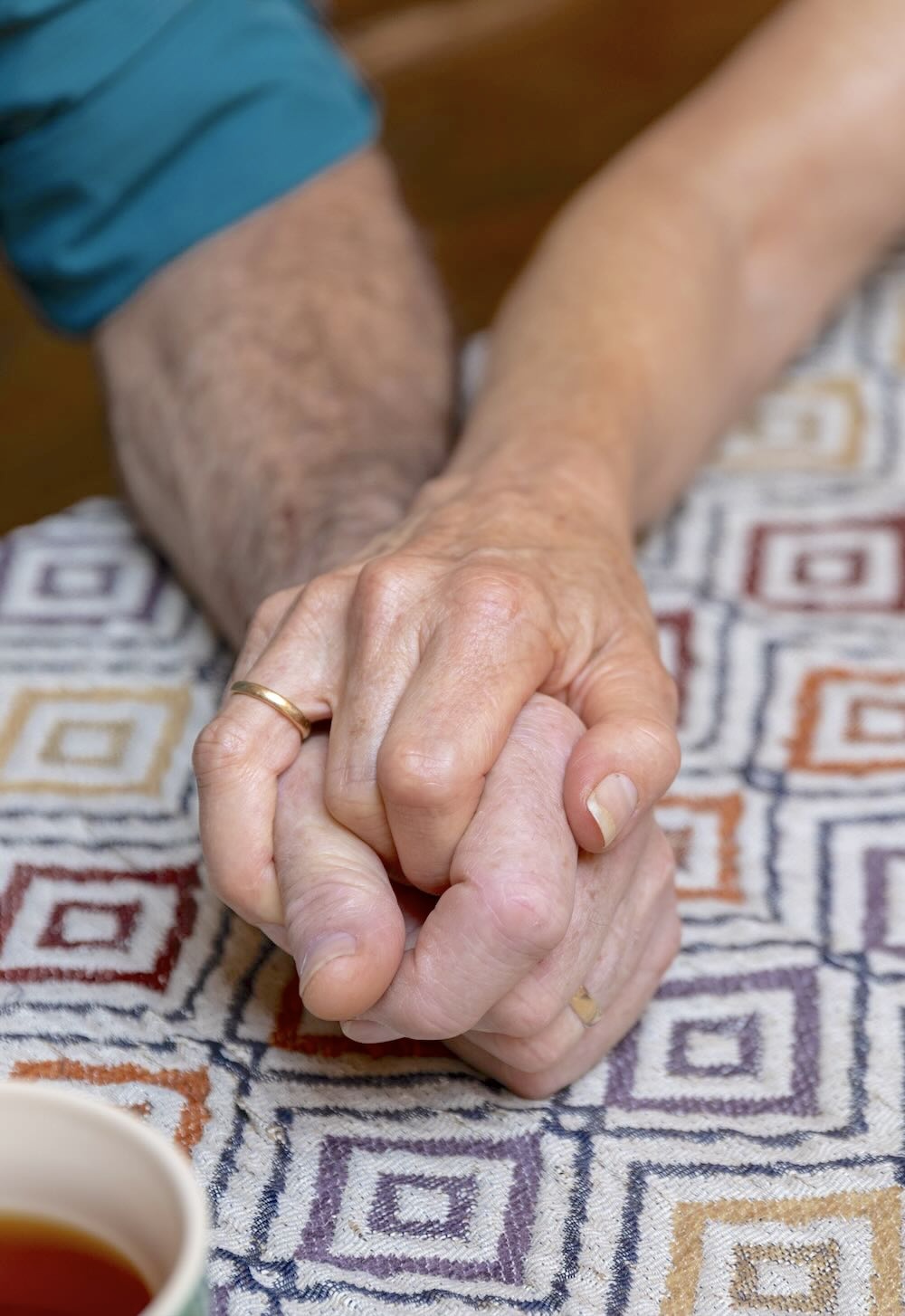
Two years in, Rob and Kim felt like strangers to each other but committed to cultivating connection and intimacy | Photo: Leentjie du Preez
Second, we chose to remain in relationship with Christ. We didn’t know why this had happened, but as Rob pointed out, no-one is exempt from suffering, and the real question was: how were we going to respond to our situation? We could keep asking why and run from God, or press in to know Him in the face of suffering, and trust Him with our outcomes, to face it with Him. We also prayed together a lot as a couple and with the children, encouraging them to know Jesus for themselves. As a statement of faith, I wrote on a piece of paper one day: ’I will speak again. You don’t know how big my God is or how determined I am. One day I will have a story to share.’
My faith did waver at times. In fact, it hit dangerous speed-wobbles. But instead of hiding my doubts and fears, I spoke to God about them honestly and vulnerably. And I clung to His promises in the Bible, particularly this one: Even to your old age and grey hairs I am He, I am He who will sustain you. I have made you and I will carry you. I will sustain you and I will rescue you (Isaiah: 46: 4). Despite everything, I had a deep sense of hope that maybe, just maybe, tomorrow would be better.
Our final decision at Monte Casino was to not lose our sense of humour, which enabled us to survive moments that could have been unbearable. Someone once refused to serve me in a shop and told me to get out because she thought I was begging, another time a Post Office teller called me a ‘deaf idiot’. It could have broken us, but we decided to see the ridiculousness of those responses and embrace doing so as a strength.
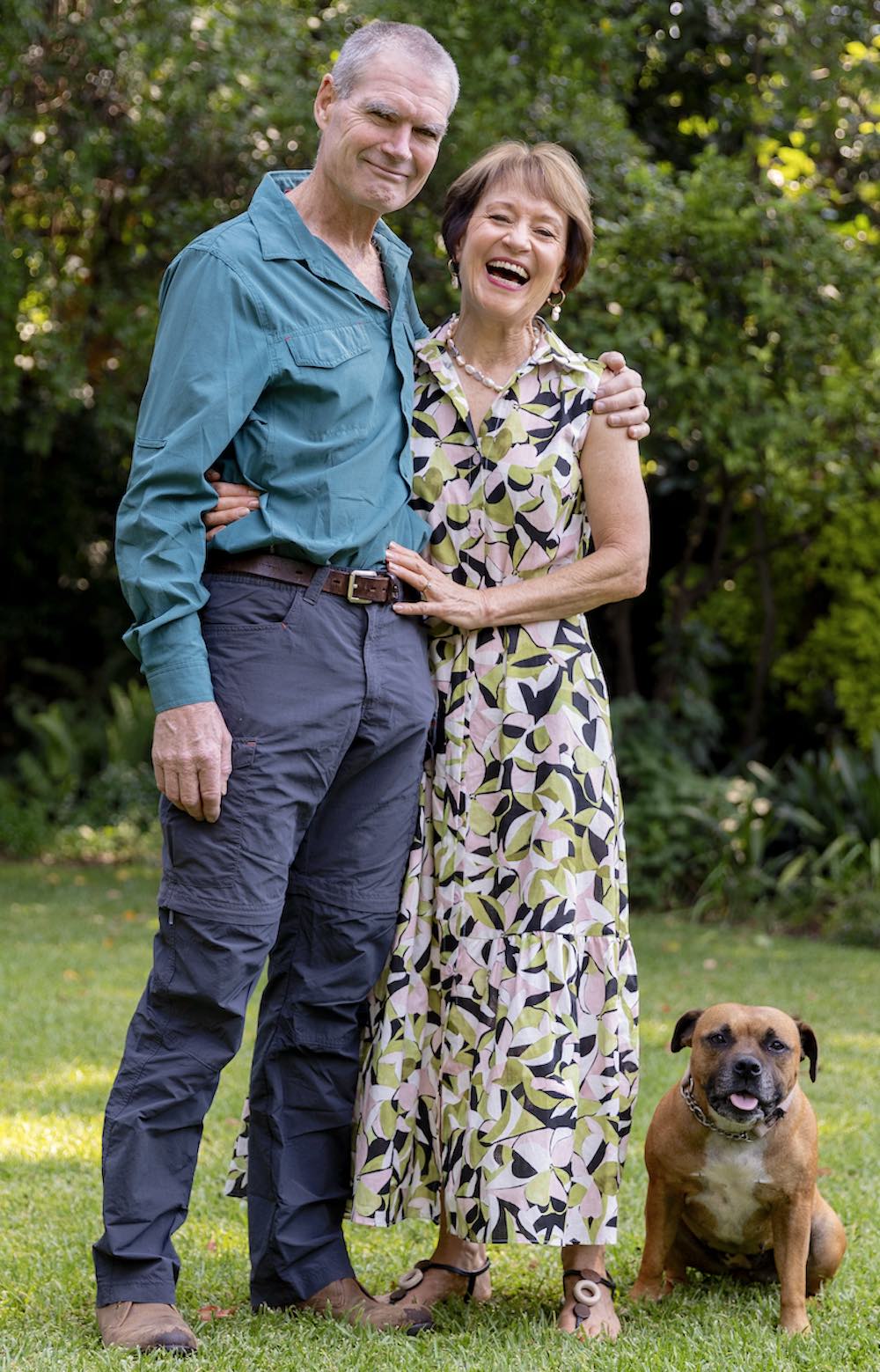
‘We decided not to lose our sense of humour, which enabled us to survive moments that could have been unbearable,’ says Kim | Photo: Leentjie du Preez
Three years in, the Botox no longer worked, and I was once more coughing so badly from hot air, dust and fumes that I even broke ribs. So I underwent a tracheostomy, whereby a hole was made in my neck below my vocal cords to enable me to breathe consistently when my vocal cords spasmed. This was unsightly but gave me a predictable airway and was a huge relief.

Shortly after Kim’s tracheostomy, the family went on a hike in the Drakensberg Mountains. From left to right: Ashleigh, Kim, Ryan, Natalie and Rob
Depression was very real for me at times and I soon realised that, when you’re feeling down, your mind seeks out more negatives. So I bought a journal and started a gratitude journey to try and find a thousand things I was grateful for. Choosing to look for gratitude and joy gradually shifted me away from fear and reorientated me towards hope.
Then, after nearly five years of no voice, I found a lump in my breast! I’d never feared breast cancer, though my mom had died from it, and the diagnosis was an incredible shock. The children grew afraid when I was diagnosed, and even more so when they saw me so ill on chemotherapy and three episodes of septicaemia following a double mastectomy.

A younger Kim with her mother Lizanne, whose death from breast cancer gave painful context to Kim’s own cancer diagnosis nearly five years after losing her voice
Rob became even more intentional about time with the children and with God. Once, he woke up Ryan with a wet flannel on his face after midnight to discuss a hard day, and most mornings he woke up at five and spent an hour with one of us. It was beautiful and I’m so grateful to him. Spiritually, we all grew massively at this very hard time.
Undergoing as many surgeries as I did necessitated some hard conversations with the children. The most difficult was before having spacer plates inserted between my vocal cords. I remember Ryan asking, ‘Is Mommy going to die?’ and Rob answering, ‘We’ll all die, Buddy. But if you’re asking about now, I need to be honest and say I don’t know. No one can answer that right now. I have to trust that if Mommy did die, God’s purposes for us would still be good.’
I signed to the children to say, ‘If Mommy does die, she gives Dad permission to love another woman, and you to love another mom.’ This was honestly one of the hardest things I’ve ever done, but I wanted them to embrace someone new without guilt.
KIM: RELATIONSHIP SUSTAINED ME
Sadly, I lost some friends, which often happens when you go through something difficult. Some people can’t cope with what you’re facing, or are facing their own challenges, and that’s just how it is. But so many others pushed in closer in wonderful ways, helping with lifts, meals, laundry and homework. When we moved house, two male friends arrived at the front door with a toolbox and asked me to allocate them to the two worst jobs. What incredible kindness. During my chemo, girlfriends climbed into bed with me, encouraged me to imagine doing the Cape Town Cycle Race or seeing my children grow up, and even emptied my buckets of vomit. What incredible friends!
We asked a few people to be mentors or surrogate parents to each of our children while I was so ill. They’d bring hot chocolate every morning before school or take the kids out for pizza or rock climbing.
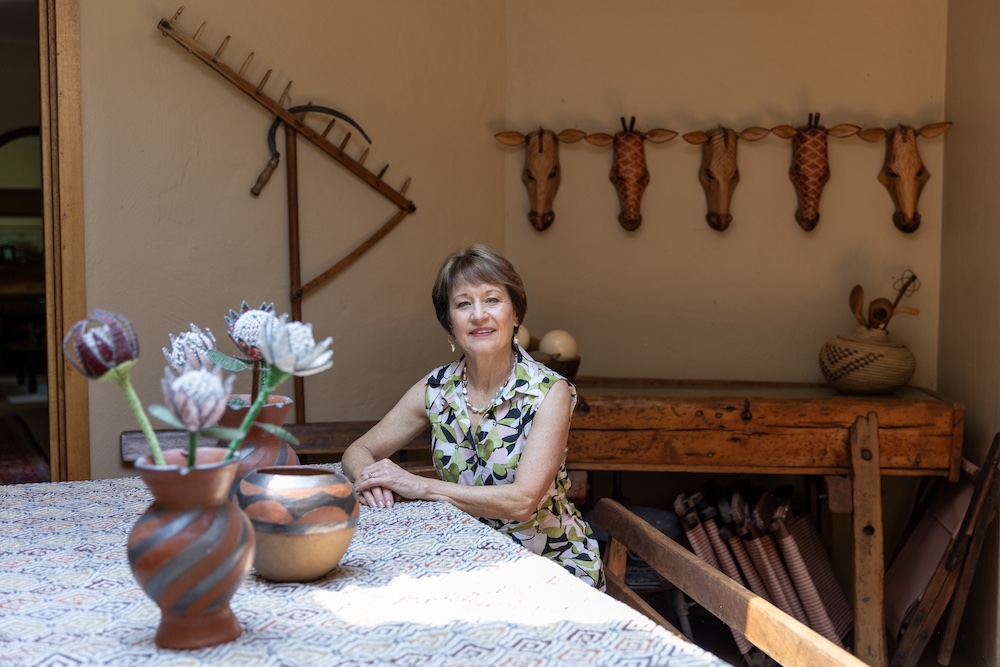
Above and below: Some friendships fell away during the difficult years, leaving Kim alone at times, but other friends drew closer, helping with school lifts, meals, laundry, homework and daily chores that had become overwhelming | Photos: Leentjie du Preez
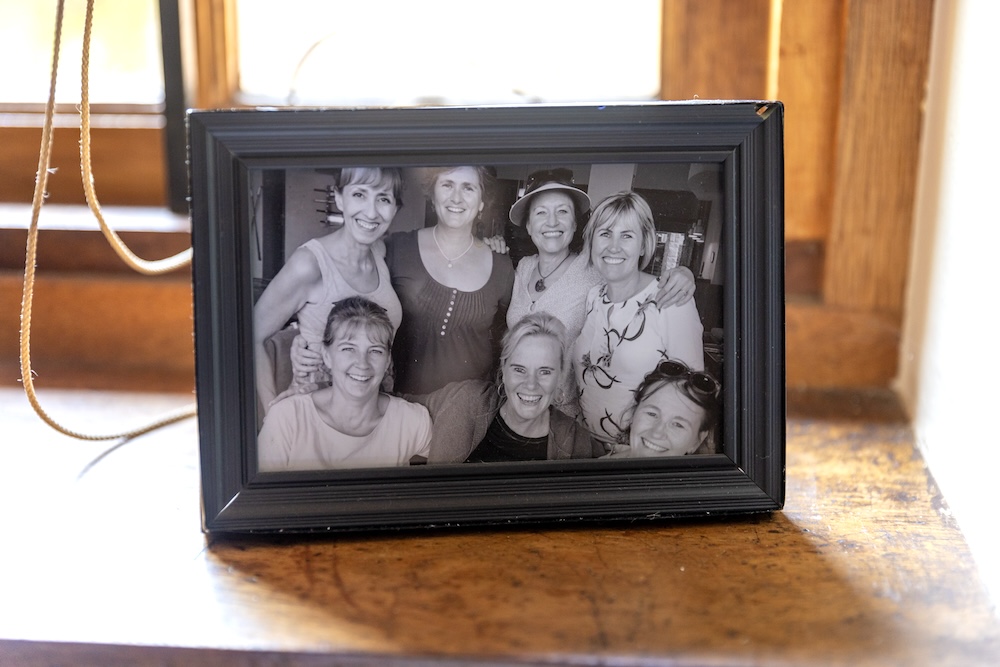
If I can offer any advice to anyone going through something similar, it’s this: surround yourself with people who don’t see or treat you as a victim, and who hold on to hope for you when you can’t hope. And if you’re the one with a friend going through tough times, ask what support they need, and be practical and honest about what support you can give. I preferred it when people stayed in contact even if they couldn’t help out practically, rather than just disappearing.
In April 2009, for no reason that doctors can fully explain, my voice began to return. I was at a traffic light trying to explain something to my father when I found myself whispering. The moment felt totally surreal and overwhelming. It was years before I had a proper, consistent voice again, but I could now chat, interject in conversations, and whisper to Rob and the children! Dinner times stretched for hours because we could finally talk. The children almost failed that school term because we spent so much time just chatting and laughing. It was incredible. I swung between being completely elated to complete fear anytime I choked or had what felt like relapses into voicelessness.
‘had my body attacked itself?’
Determined to know what had happened, Rob and my brother went to the internet and medical textbooks and colleagues, and discovered there could have been a link between the breast cancer and voice loss! In their pre-malignant phase, cancer cells can release a protein into the body, causing an immune response whereby the body attacks itself. Had my own body’s immune response to the cancer attacked my vocal cords? Maybe. Either way, we learnt that when this happens the damage is often permanent, but here my voice was returning. What a miracle.
Life began to settle into a predictable routine, but then we realised we felt strangely bored! We were going through withdrawal from the adrenaline and trauma we’d become addicted to. We needed help, and we got it through therapy and counselling to process what had happened to us. There’s no shame in getting help. Please, if you are struggling, reach out for help!

‘I began to do so many of the things I’d imagined doing while so ill,’ says Kim, including hiking and completing the 110km Cape Town Cycle Tour on a tandem with Rob
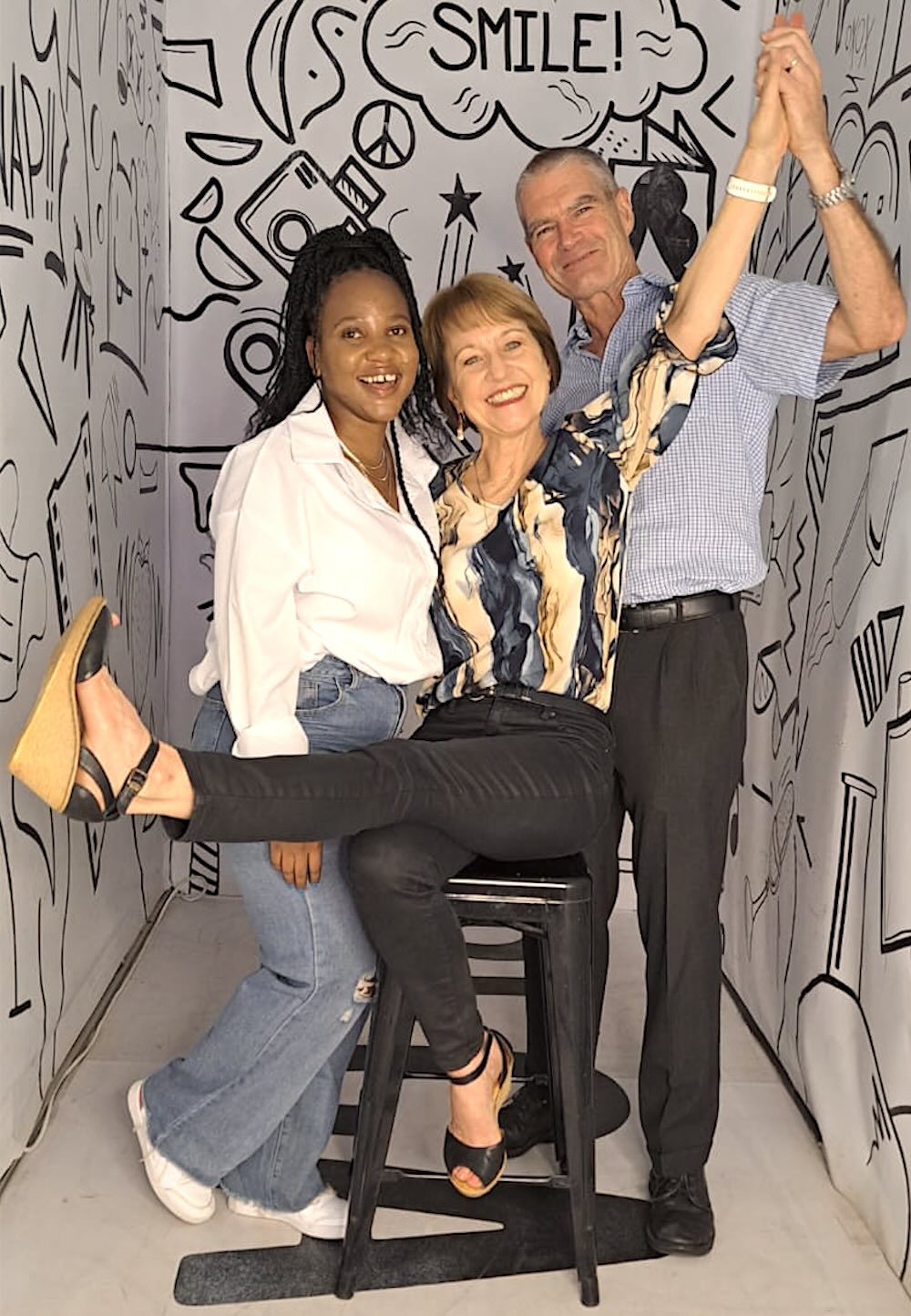
The Ballantines in celebratory mood with their ‘other daughter’ Khethiwe
I couldn’t maintain my voice in noisy factories as I had done previously, so I retrained and became a life and business coach, able to encourage others with what we’d learnt from our difficult years. In addition, I began to do so many of the things I’d imagined doing while so ill: hiking, doing the Cape Town Cycle Tour on a tandem with Rob, sharing our story, travelling and seeing our family expand. We have truly seen the goodness of God in the land of the living!
‘if you are experiencing pain’
As I look back, I see that fundamental to surviving this journey was relationship: my relationship with my family, with my diverse groups of friends, with my husband and with God. Christ was the key to us coping. I suggest that if you are experiencing pain or trauma and you don’t know Jesus, ask him to reveal himself to you where you are at. He sees you, he knows you, he cares so deeply for you.
I also want to encourage you not to isolate but to reach out to friends, pastors and psychologists or counsellors. Please don’t carry things alone.
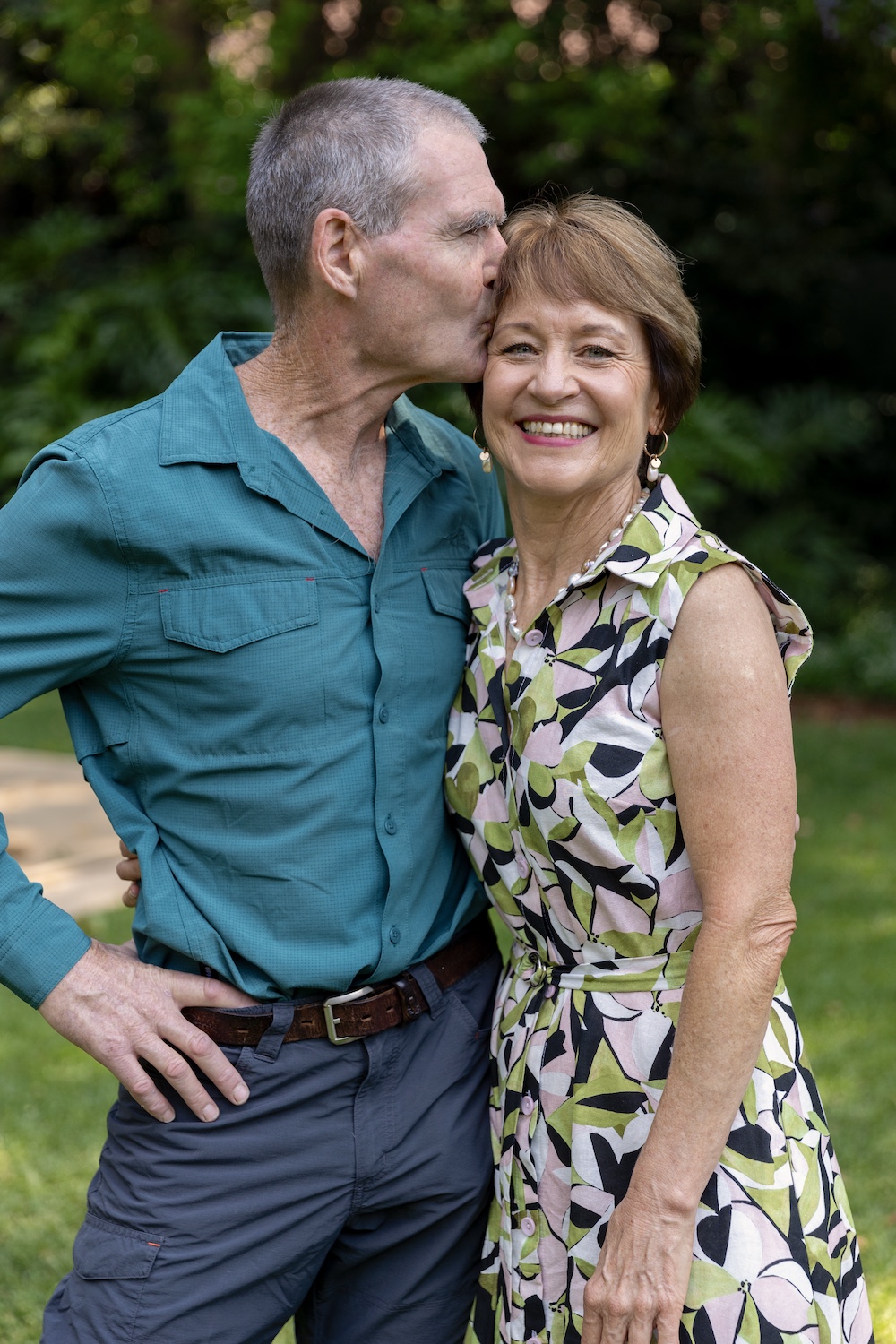
‘I’m so grateful to Rob,’ says Kim of her husband who, while working long hours made sure he spent weekly time alone with every family member | Photo: Leentjie du Preez
I wrote Hot Tea and Apricots: A Memoir of Loss and Hope about our journey, incorporating the notes I’d written to communicate with my family and to process what I was going through. Initially it was just for our children, as trauma can create massive memory gaps and I wanted them to have an account of that period in our lives, both the hard moments but also the light, joy and hope-filled moments. I decided to publish the book because lots of people asked for this, but only once my entire family had read it and agreed it was an accurate reflection of our journey.
I hope the book will be an encouragement and that it will be the life-giving ‘hot tea and apricots’ of the title to sustain others as they read about how faithful God was to two flawed individuals who decided to cling onto Him and each other in the face of trauma ♦

Kim holds a copy of Hot Tea and Apricots, the memoir she wrote from the notes she used to communicate with her family without a voice. ‘I hope it will sustain others as they read about how faithful God was to two flawed individuals,’ she says | Leentjie du Preez
Keen to hear more of this extraordinary story? Buy Kim’s book at Takealot, Amazon or Exclusive Books
